
KONTAKT – barrier-free communication
PUBLIC
Germany, h_da Hochschule Darmstadt
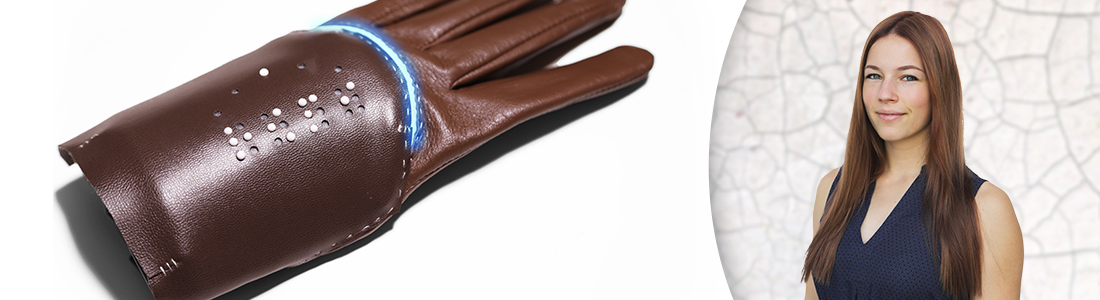
Galerie de l’équipe
Vue d’ensemble du projet
KONTAKT translates tactile language into spoken language and vice versa, spoken language into Braille to give deaf-blind people hearing and a voice.
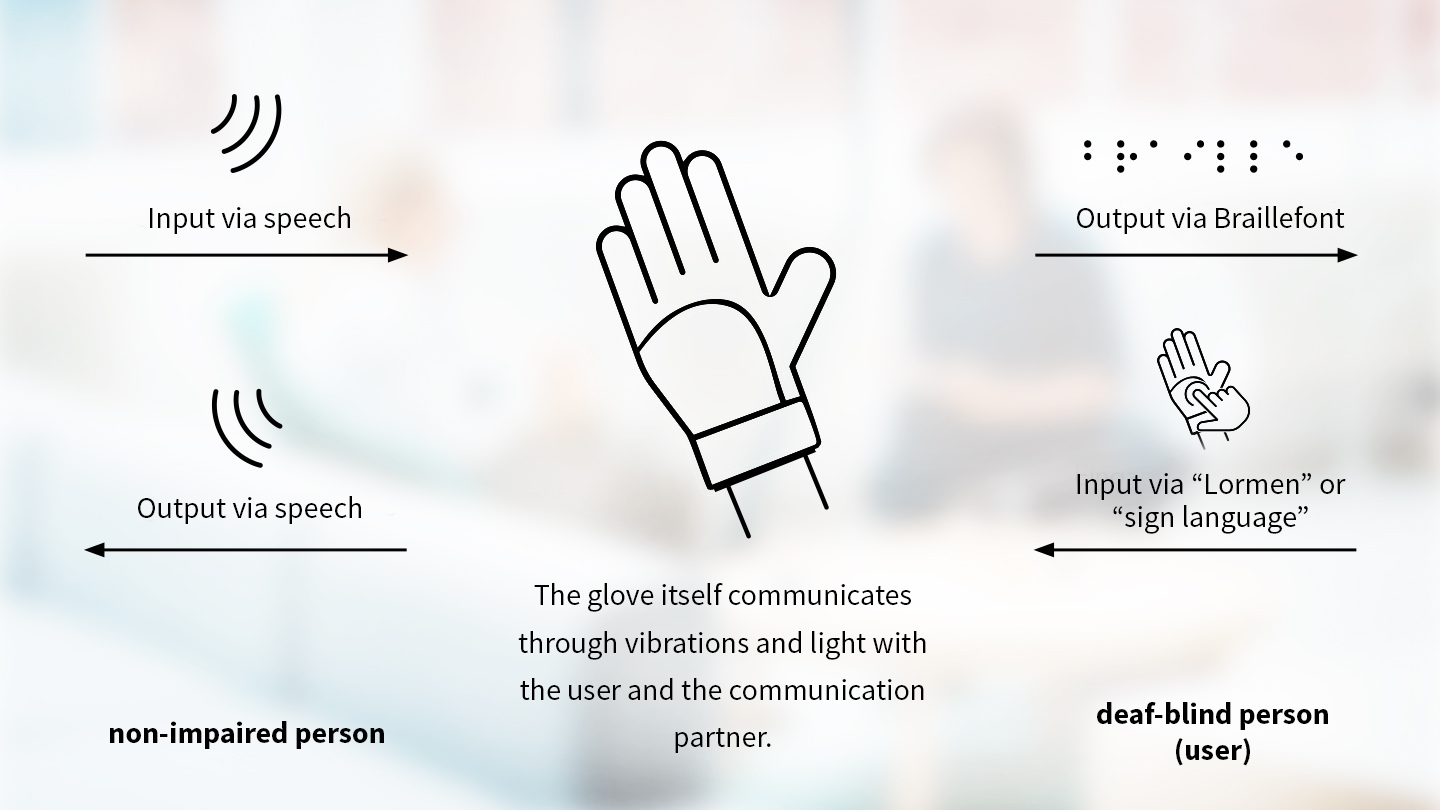
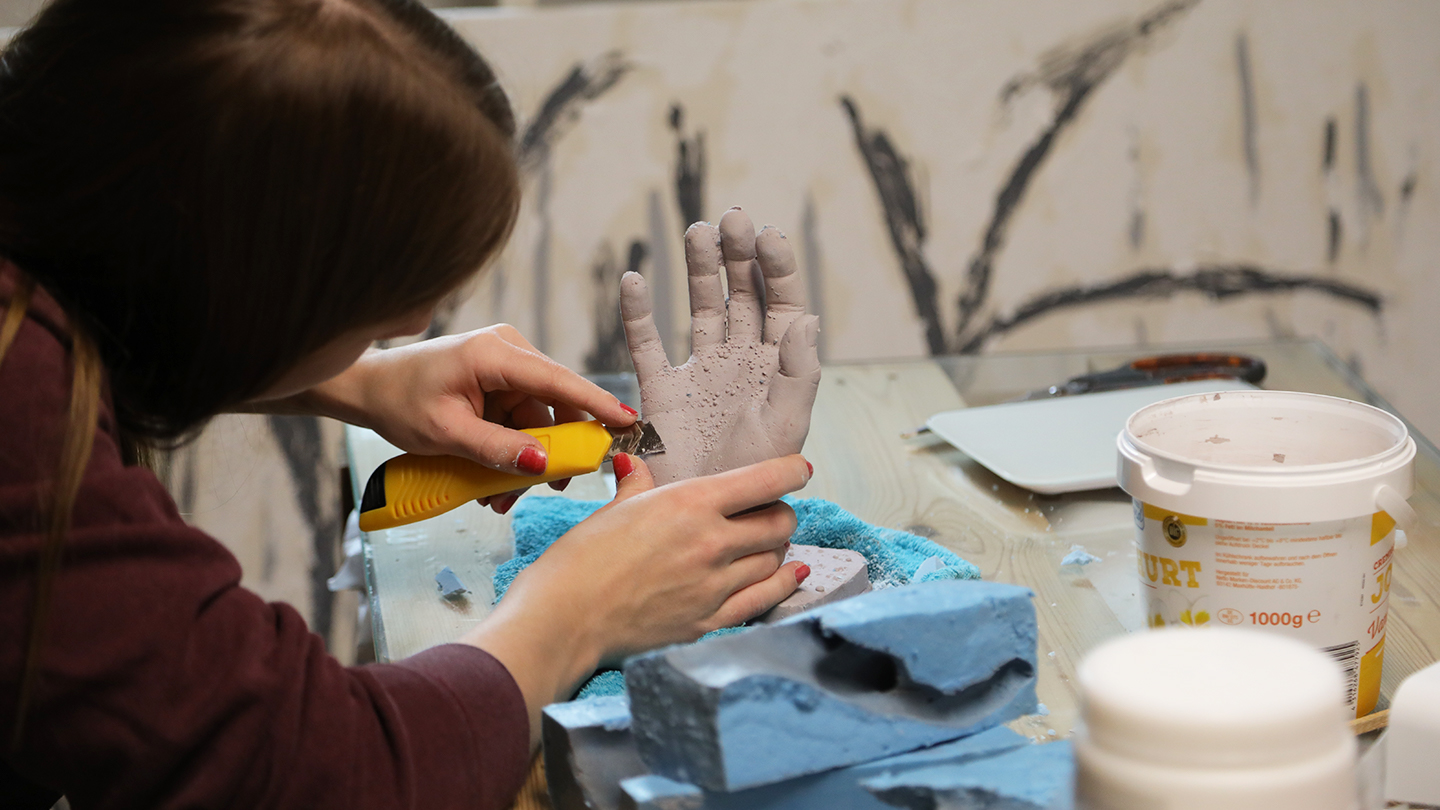
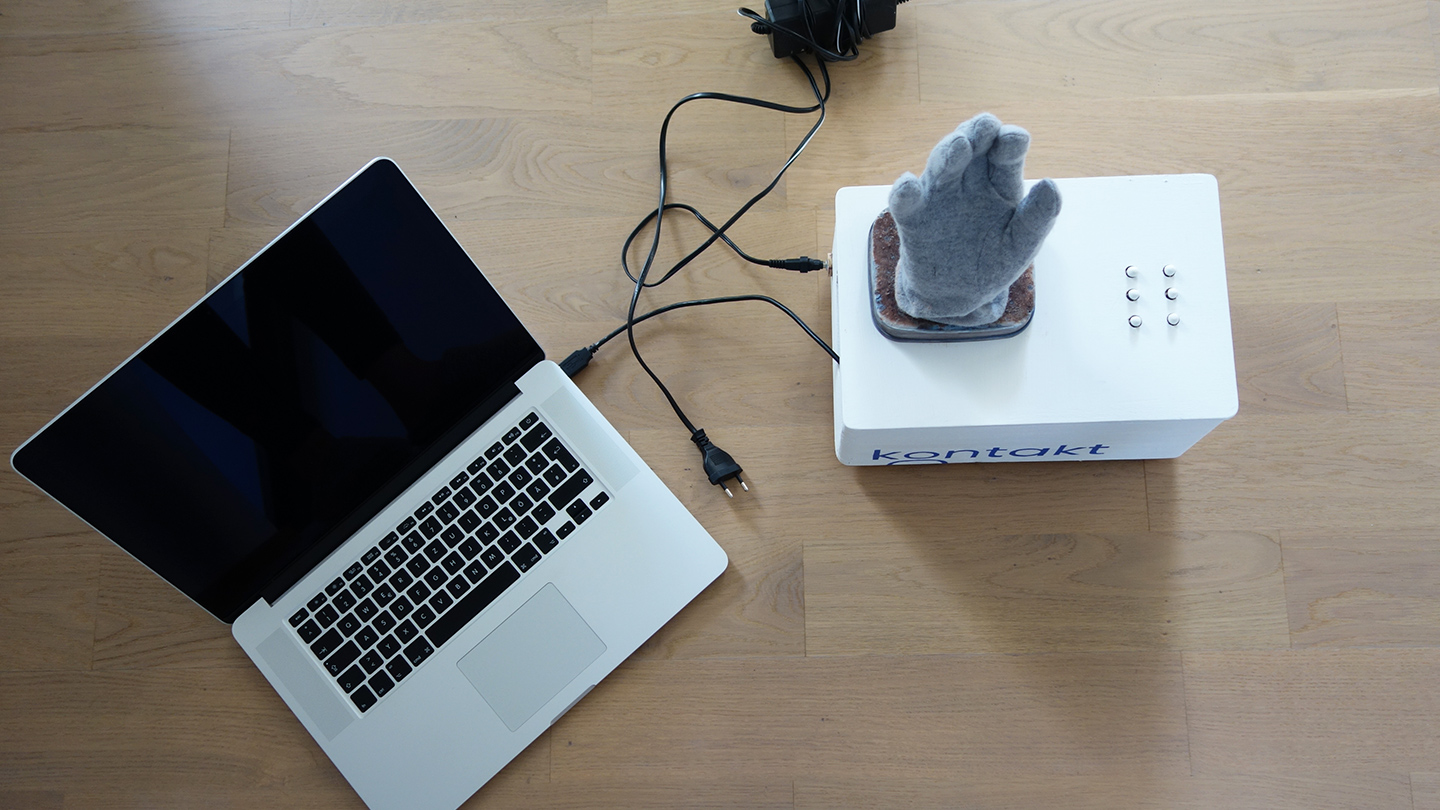
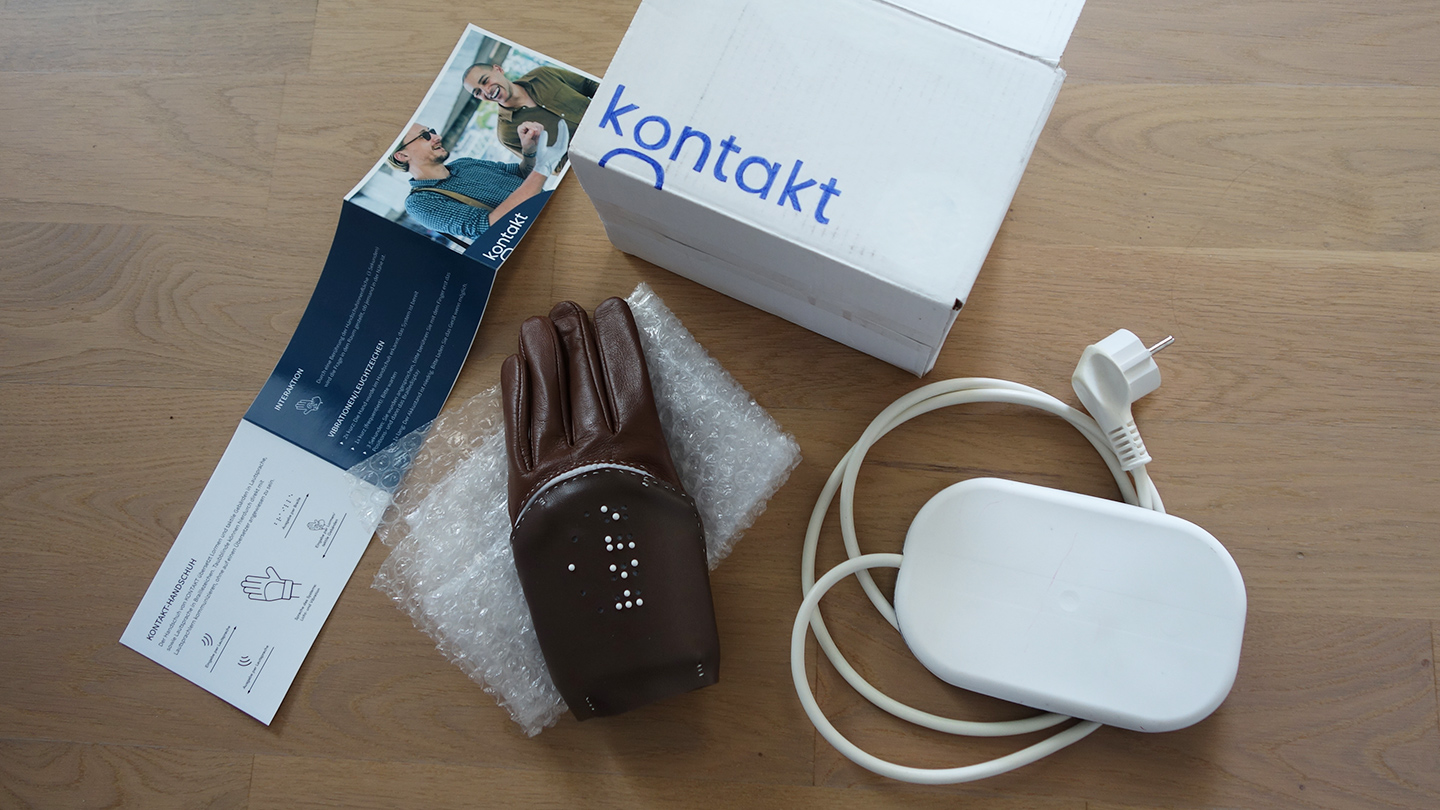
It serves as a translation medium in the form of a glove system. Speech can be translated into tactile Braille, while "Lormen" (one-glove system) or "sign language" (two-glove system) is converted back into speech. This speech is emitted from the glove via an audio output.
"Lormen" are letters that are written in the palm of one hand. Each area of the hand is assigned to a letter. Words and sentences can thus be written and read by deaf-blind people. Sign language is articulated and read by deaf-blind people using their hands.
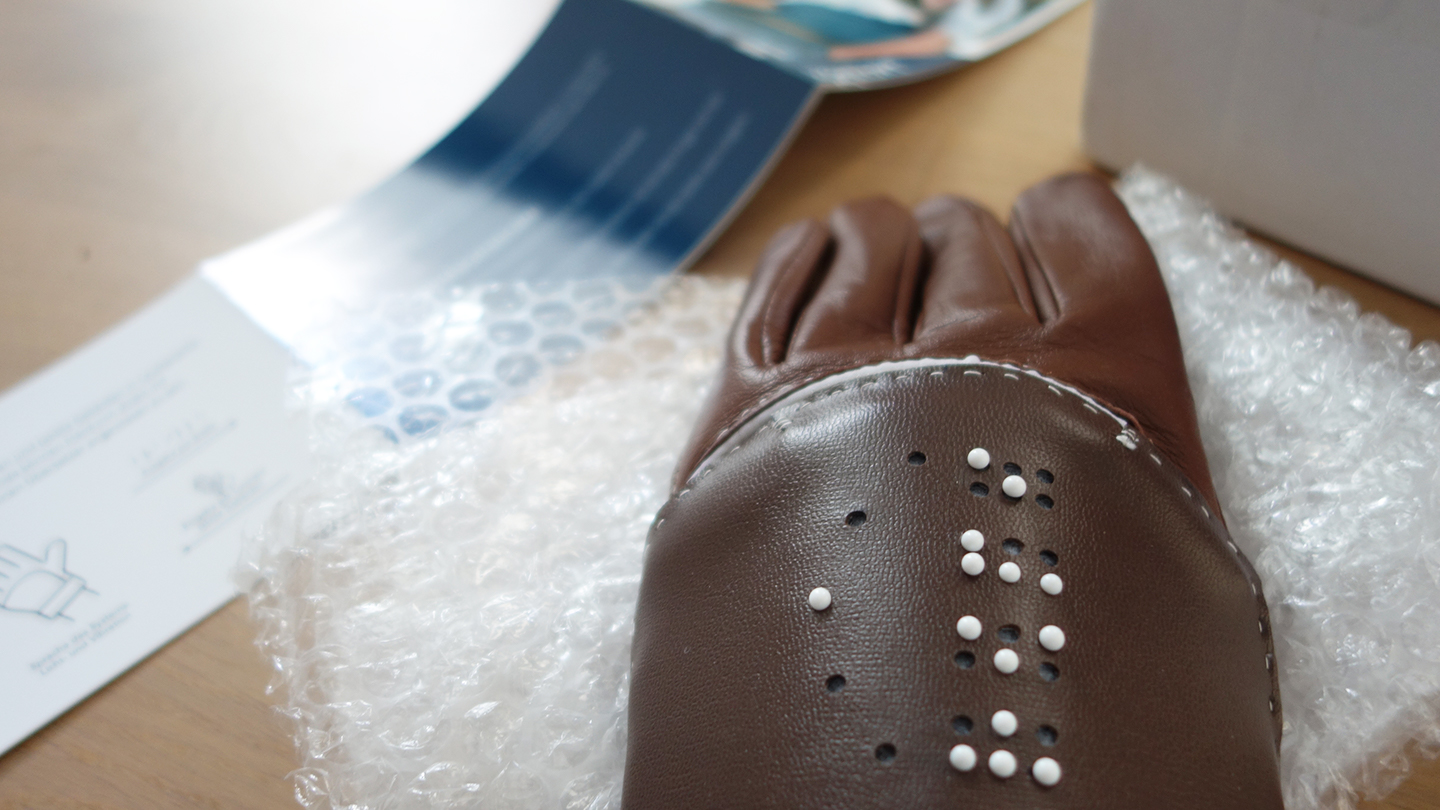
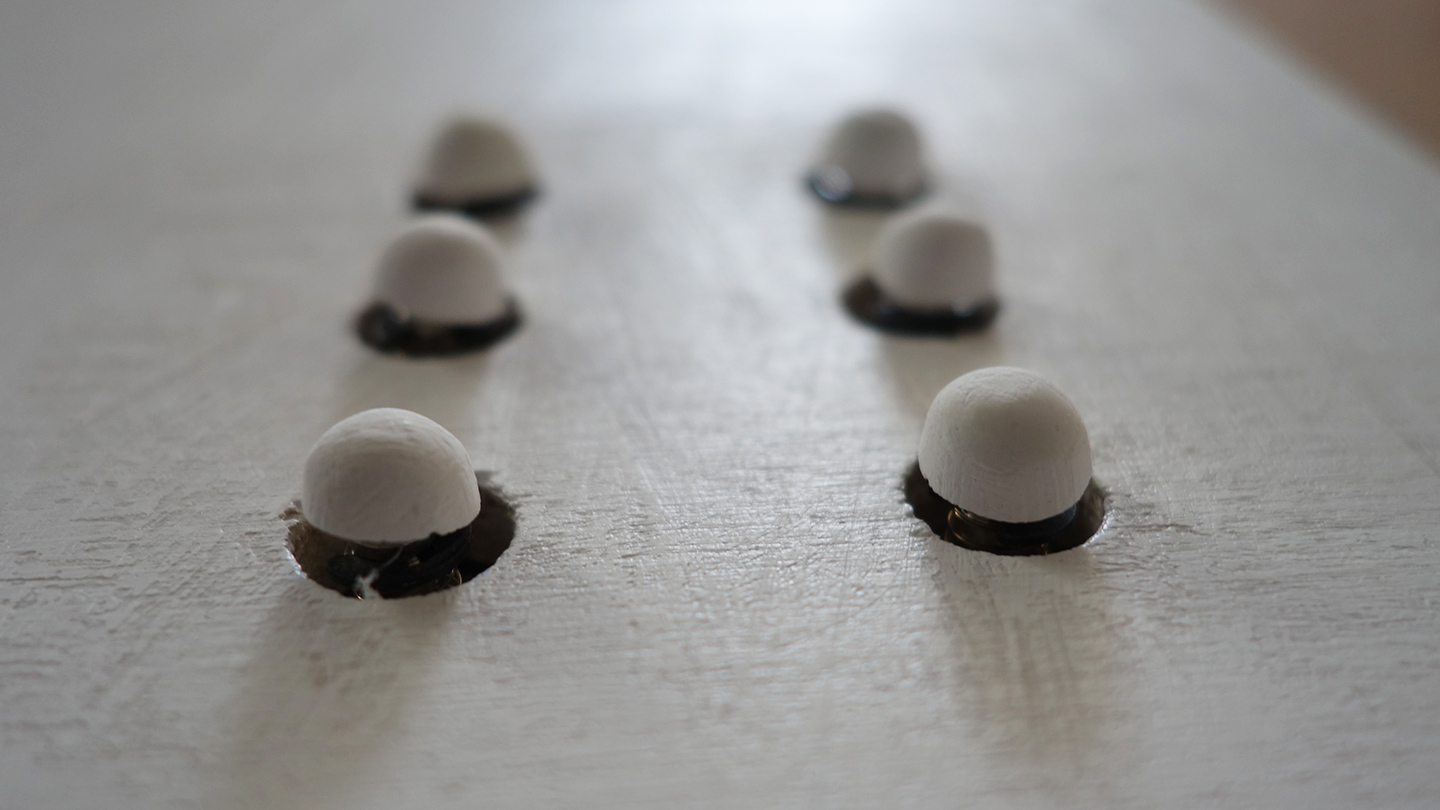
The glove system recognizes the "Lormen" through touch sensors; sign language is recognized through touch-, bending- and position sensors to get the exact position of the hands in the room. When a user wants to communicate with a non-impaired person, he uses his familiar language, e.g. "sign language": Everything he articulates with the glove system is then automatically translated into audible language and emitted via an audio output. The speech pattern is as natural as possible and can be customized to fit the user. In reverse, speech is translated into Braille. An Audio-Input recognizes the speech and translates it into the embossed printing. It can be felt on the back of the glove.
Compared to other products, the user does not need any further connection to other devices, for e.g.: his smartphone. The system can be easily operated on the go. By pre-selecting sign language or Lormen when ordering the system with the help of his assistant, the user can choose his preferred language in which to communicate. Through the audio output and input, the user - but also a communication partner - can communicate in his native language without having to learn anything new. The purchase of the system also has advantages: Users rent the system on a daily, weekly or annual basis. Most of the costs incurred can be covered by the public health insurance. This means that users always have a viable device that they can use flexibly and cost-effectively. However, the system does not replace a deaf-blind assistant, but gives its users hearing and a voice. This means that deaf-blind people can also talk to people who do not speak tactile languages. With KONTAKT, deaf-blind people are more independent and self-determined.
A vision of the glove system is, that any languages can be translated to the user's mother tongue. E.g.: When he speaks with a french speaking person, speech is translated into german Braille. If he answers, his german sign language or Lormen are translated into French. That means, that the system is barrier-free throughout different languages, too!
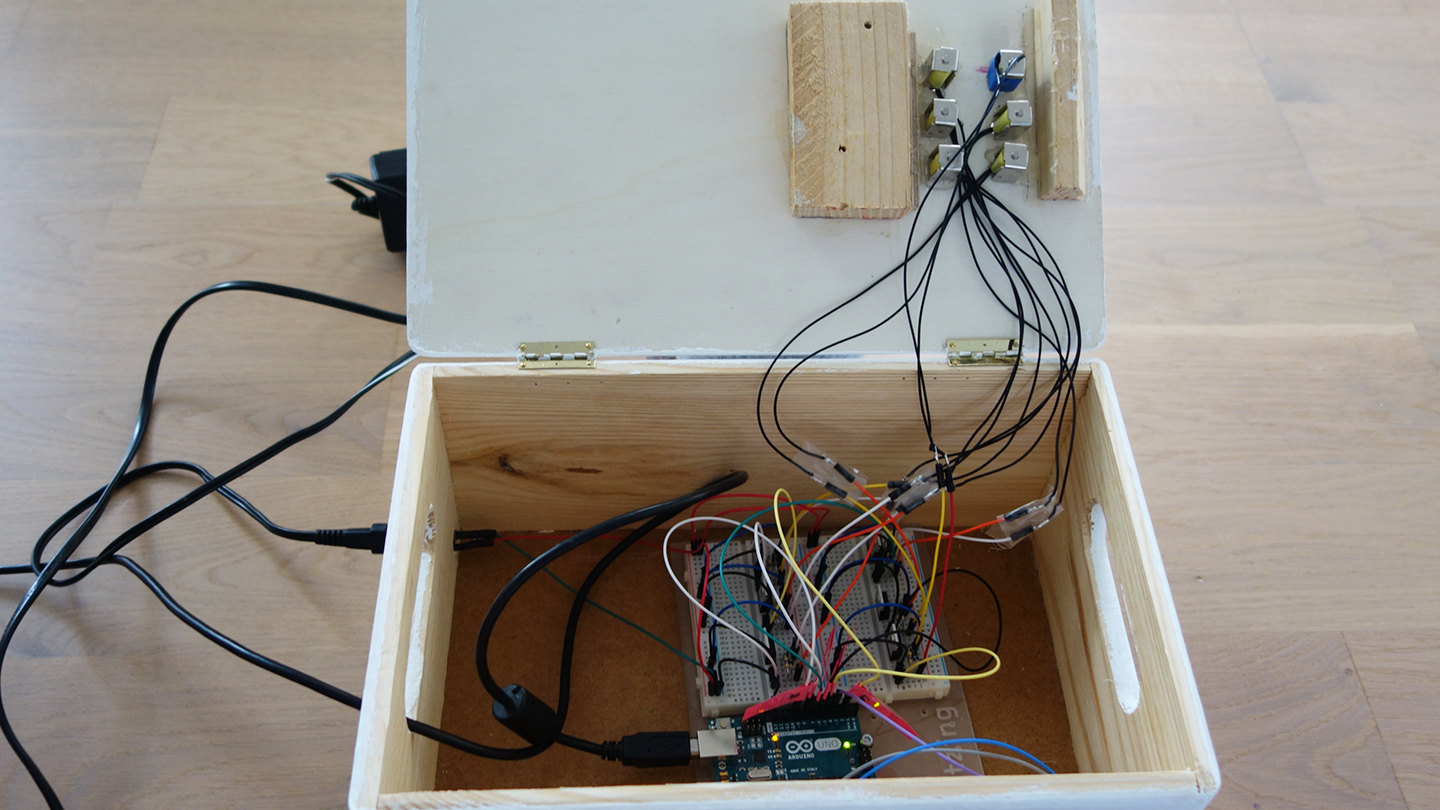
KONTAKT is currently in the concept phase. It still needs a lot of testing and development to make it functional at all. It should therefore first create an awareness of the disability and related limitations. It should show people that there are disabilities that significantly limit the primary senses and that these people are also a valuable part of society. I think we could learn a lot from these people. Perhaps this will lead to new & inspiring projects and ideas to enrich everyday life with disabilities and to explore new ways of designing things with a new point of view.
Microsoft Azure would help the product come to life. Not only can the Azure Cognitive Services help to create a natural speech pattern, but also enables the deaf-blinds to express themselves in the best way possible. Therefore, the speech and language APIs fit perfectly.
Further informations on how KONTAKT works can be seen on Vimeo: https://vimeo.com/319362168 and on the project website: https://ninahanselmann.de/kontaktprojekt.html
À propos de l’équipe
Hello there, I am Nina and until March 2019, I studied Interactive Media Design in Germany.
During my studies, I focused heavily on user experience and repeatedly dealt with complex problems. That's how my passion for design evolved, as well as my empathy for a wide variety of user groups and multi-sensual design experiences.
For my thesis, I dealt with the phenomenon of synaesthesia. People with synaesthesia, for example, hear sounds when they see colors. This ability is not only reserved for genuine synaesthetes: In a way, it is found in neurotypical people, too! We also link sounds to certain properties or haptics of products or things. This lead me to my later project. If two essential senses are missing, it can have far-reaching consequences. Due to the limitation of their senses, deaf-blind people experience a different level of reality - the ability to express oneself is thus impaired and bound to a person who can translate tactile language. This led me to my project KONTAKT.