
Snailly Labs
PUBLIC
Indonesia, Universitas Komputer Indonesia
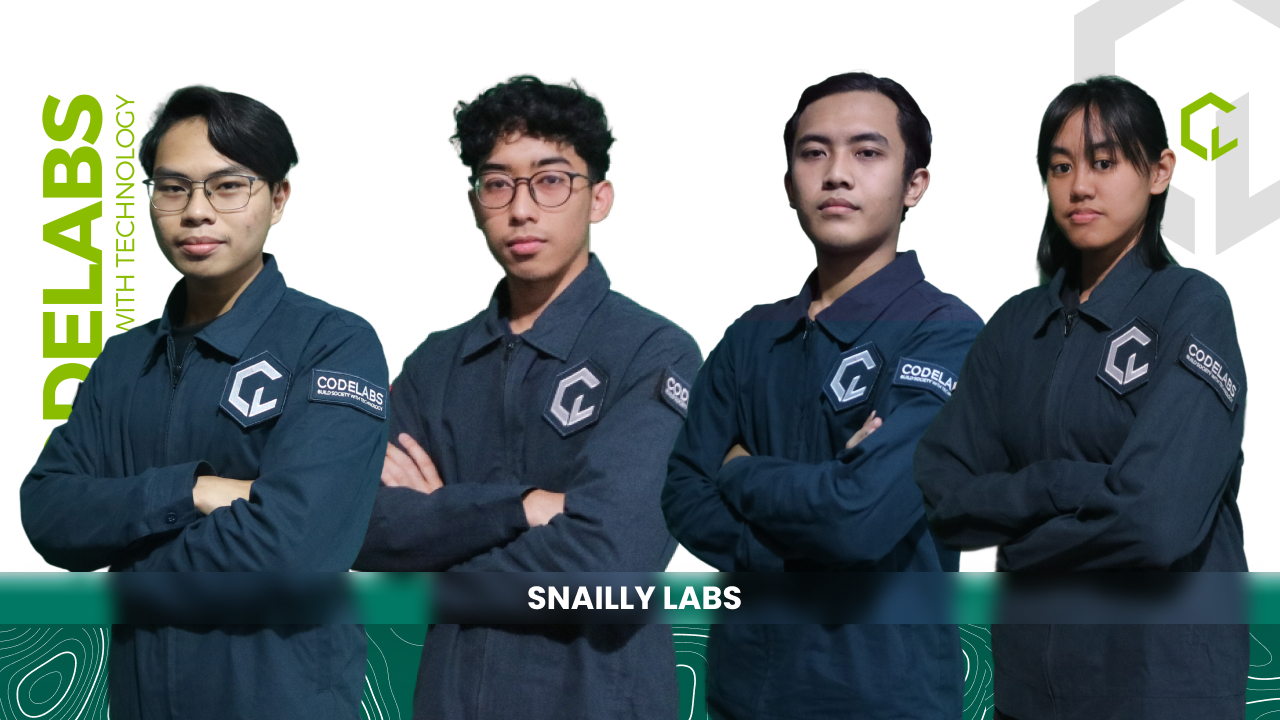
Members

Ariq Hikari Hidayat
ADMIN
Indonesia

Muhammad Favian Jiwani
ADMIN
Indonesia

raditya aryabudhi ramadhan
ADMIN
Indonesia

Regia Atmowidjaja
ADMIN
Indonesia
Team Gallery
Project Overview
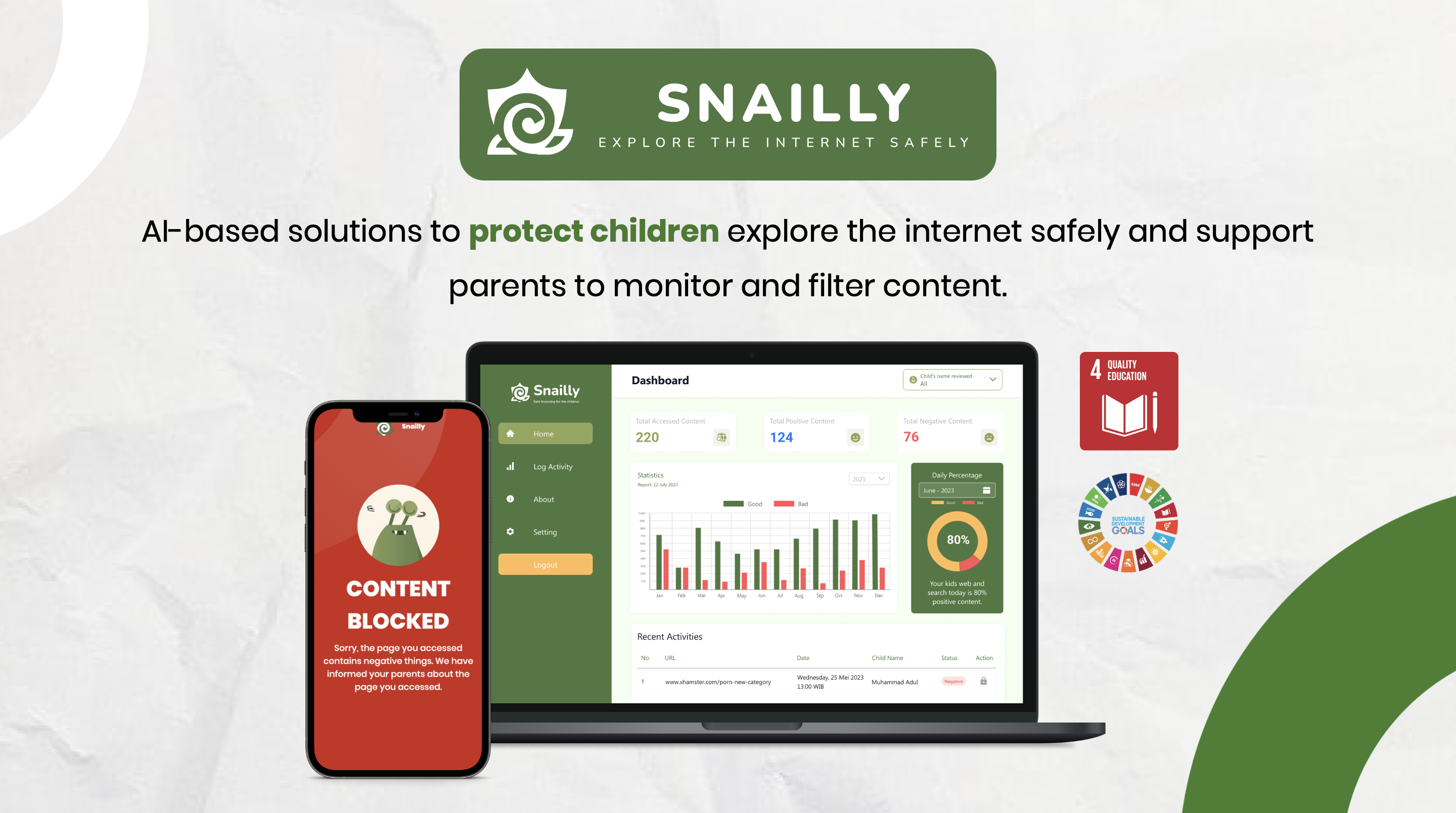
Snailly is an AI-powered child online safety platform designed to protect children while helping parents stay informed and involved without constant supervision. Built in response to the growing exposure of children to harmful online content, Snailly focuses on understanding content context rather than relying solely on static domain or application blocking.
At its core, Snailly uses AI-driven content understanding to analyze text, images, and videos across websites and social media in real time. When potentially harmful content is detected, access is blocked and parents are notified with clear, explainable reasons behind the AI’s decision. This human-in-the-loop approach ensures that parents remain in control, allowing them to review, allow, or block content based on context and family values.
Snailly was developed through iterative testing with elementary and junior high schools in Indonesia. Through direct observation and feedback from parents and educators, we identified key challenges such as children’s fast browsing behavior, parents’ difficulty understanding why content was blocked, and the lack of meaningful insights from existing parental control tools. These insights shaped Snailly’s core features, including explainable AI decisions, real-time notifications, and activity reports that transform raw browsing logs into actionable insights for parents.
The platform is built on Microsoft Azure services, leveraging Azure AI Vision, Azure Machine Learning, and Azure OpenAI to support multimodal content analysis and responsible AI practices. This architecture enables Snailly to scale while maintaining transparency, fairness, and reliability.
Snailly aims to create a safer and more educational digital environment for children by balancing automated protection with human judgment. Rather than replacing parents, Snailly empowers families to guide children’s online experiences responsibly, making child online safety more accessible, inclusive, and effective across diverse communities.
About Team
Snailly Labs is a multidisciplinary student team from Indonesia focused on building responsible and inclusive AI solutions for child online safety. Our team consists of four university students from different academic semesters, bringing diverse perspectives and complementary skills into one collaborative workflow.
Ariq is a Full Stack Developer responsible for system architecture, backend services, and overall platform reliability. Favian is a Front-end Developer who focuses on building responsive, accessible, and performance optimized interfaces for both children and parents. Raditya is a UI/UX Designer who leads user research, usability testing, and interaction design, ensuring that Snailly remains intuitive and suitable for families with different levels of digital literacy. Regia is an AI Engineer responsible for developing and integrating machine learning models, multimodal content analysis, and explainable AI mechanisms used in Snailly’s core protection system.
The team is supported by two academic advisors, Mr. Adam and Ms. Dian, who are our university lecturers. They provide guidance in research direction, ethical considerations, and technical validation, while the core design, development, and decision-making processes remain fully led by the student team.
As students from different academic stages, we collaborate through iterative development cycles that combine technical experimentation with real-world validation. By working closely with schools and parents, we continuously refine Snailly to ensure it remains ethical, transparent, and accessible. Through Snailly Labs, we aim to demonstrate how student-led teams, supported by academic mentorship, can build impactful and production-ready AI solutions for real societal challenges.
Technologies we are looking to use in our projects
Android
App Services (Mobile & Web
Azure
Cyber Security
Machine Learning
Python
Social Media

