
Institution based shuttle management system (IBTROS))
PUBLIC
Nigeria, Covenant University
Project Overview
Background
Transportation challenges at Covenant University and similar institutions globally are well-documented. The primary issues include delays in shuttle services, disorderly queues, and uncertainties regarding shuttle arrival times. These challenges have resulted in frustration for students, faculty, staff, and other users of shuttle services. In extreme cases, individuals are forced to stand dangerously close to roads, increasing the risk of accidents.
The Institute-Based Shuttle Management System (IBTROS) aims to address these challenges by automating shuttle bookings and creating a safer, more efficient commuting experience. This project utilizes cutting-edge Azure AI technologies, including Azure Cognitive Services (Text-to-Speech, Speech-to-Text, and Chat Avatars) for conversational interactions, GPT-40 on Azure Foundry for advanced language model capabilities, and Azure Cosmos DB (MongoDB API) for smart data indexing and storage.
Our system also leverages an RFID-based payment solution to enable quick and seamless access to shuttle services. The project has been granted $5000 in Azure credits through Microsoft Founders Hub, along with additional support to ensure the development of a robust and scalable solution.
Aim
The goal of this project is to develop a system for managing shuttle services at Covenant University, which can be extended to other institutions globally. The system focuses on:
Reducing wait times and uncertainties for shuttle users.
Addressing safety concerns, such as crowding near roads.
Minimizing environmental impact by optimizing shuttle operations.
By combining automation with advanced AI technologies, the system creates a seamless, user-friendly experience for ordering and accessing shuttle services.
Problem Statement
Current shuttle services at Covenant University face several challenges:
Delays and uncertainties: Users have no reliable way of knowing when the next shuttle will arrive or whether space will be available.
Safety risks: Disorderly queues and overcrowding near roads create dangerous situations.
Environmental impact: Inefficient shuttle operations lead to unnecessary emissions.
These issues are further exacerbated during rush hours when users scramble to secure a seat, often competing with others in a chaotic manner. Faculty, staff, and visitors also face similar challenges when commuting to and from the institution.
Methodology
The IBTROS Shuttle Management System combines AI-powered automation with RFID technology to solve these challenges:
AI-Powered Bot:
Hosted on Telegram, the bot uses a rule-based approach with an inline keyboard for seamless user interaction.
Users can book shuttles by simply interacting with the bot, which provides real-time updates on shuttle availability and estimated arrival times.
RFID-Based Payments:
The system enables cashless payments using RFID cards, making transactions faster and more convenient.
Payments are processed instantly, allowing users to quickly board the shuttle.
Azure Integration:
Azure Cognitive Services: Facilitates conversational booking through speech-to-text and text-to-speech capabilities.
GPT-40 on Azure Foundry: Enhances the chatbot’s ability to understand and respond to complex queries.
Azure Cosmos DB: Provides a scalable database for efficient storage and indexing of shuttle schedules, user data, and payment information.
Results
Queue theory was applied to analyze the current and proposed shuttle systems. The results demonstrated:
A 96% improvement in efficiency with the proposed system.
Significant reductions in wait times and queue lengths.
Enhanced safety and organization at shuttle stands.
The system was also evaluated for scalability and reliability, ensuring it could handle peak usage periods without delays.
Conclusion
The Institute-Based Shuttle Management System revolutionizes how shuttle services operate within institutions. By integrating advanced AI, IoT, and RFID technologies, the system:
Ensures faster and safer access to shuttle services for students, faculty, staff, and visitors.
Reduces carbon emissions through optimized shuttle routes and efficient resource utilization.
Provides a user-friendly, cashless payment system that eliminates delays.
This project is a significant step forward in addressing transportation challenges faced by institutions globally. By leveraging the $5000 Azure credit and other resources provided through Microsoft Founders Hub, IBTROS is well-positioned to deliver a transformative solution that aligns with modern needs and sustainability goals.
About Team
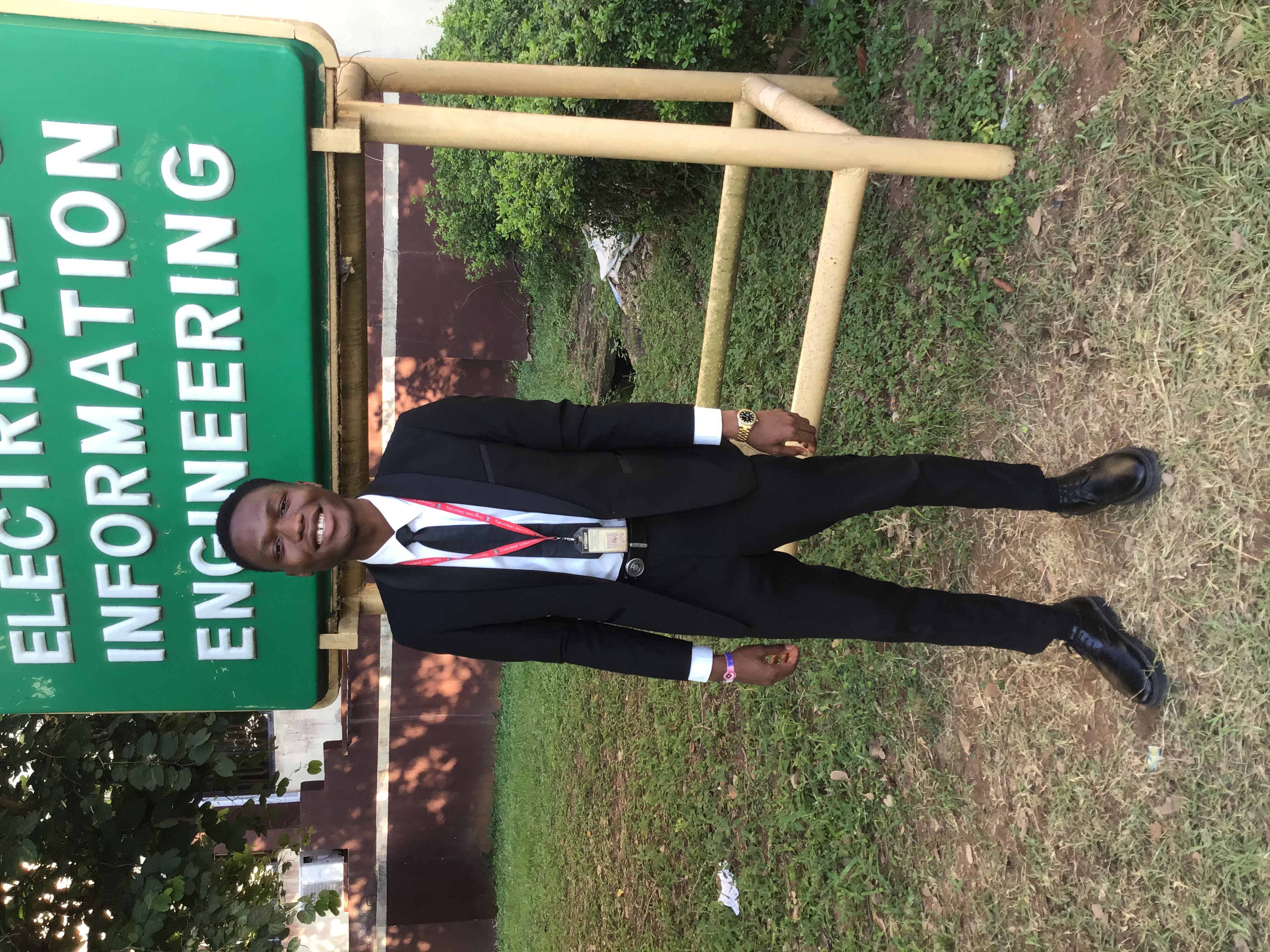
My comprehension of the past expertise I have in programming, artificial intelligence, and computer networking will be solidified by completing imagine cup competition. Team IBTROS is focused on creating solution to transportation for institutions which includes churches, universities and banks.
The project was inspired by observation on how we live using Covenant University in Nigeria as case study. People who wish to use a shuttle service get things done in an rowdy manner and sometimes these people never get to enter the shuttle due to challenge of people struggling to enter. Team IBTRS used queue theory to model the shuttle system in Covenant University and it was since that it was about 96% efficient. IBTRS hope to create a system of orderliness in entering a shuttle or a transportation system for institutions starting from Covenant University and scaling up to other institutions in Nigeria, in Africa and the world at large. For the previous three semesters of my academic career, I have attended two hours per week of leadership lessons, and a lot has been presented to me about what a leader should do in order to effectively coordinate and organize a group. I have improved my capacity to effectively communicate, think critically, handle pressure, lead others, be flexible in my approach to delegation, and work as diligently as I can to complete a project on schedule thanks to solid communication skills. I have acquired all of these talents over the years, starting in my secondary school years and continuing through my university years. I served as the class captain during my fourth year of study at Word of Faith Secondary School in 2014 and as a class captain, I learned what a leader should do, which is to strive to accommodate every request made by a classmate by doing what is right and within my capacity. By God's grace, I was also given the opportunity to serve as the chapel prefect at the same school during my sixth year, in 2015–2016, and I gained experience by not only motivating my classmates but also the entire student body of the school for activities linked to chapel as well as other events. I had the honor of serving in a leader position during at my service unit during my second year at Covenant University in 2018, and I was in charge of organizing the foundation for fortune program, which teaches individuals about Christ Jesus. In the years 2021–2022, I also served as an assistant word study cell leader. We were preparing to write a well-researched 23-page term paper regarding 5G communication when I was chosen to be the group's leader. This was accomplished by the about 10 people in my term who helped me read papers and summarize them so I could also contribute, which was the final editing. I was nominated by my mates to lead several different groups throughout my last year's first semester at Covenant University. This was a project that required participation from every student because each group member would present. One thing I took up from this assignment is that a successful group project requires everyone to be an active participant. In my final semester at the 500-level, I also served as the term paper chair. It was an honor to hear the group members' perspectives on the work we were doing, and by God's grace, we received a decent score. I served in organization like waste-to wealth, an organization which sell plastic bottles to organization and industries like “Eanactus” to create wealth. I'm now enrolled in an online course about blockchain technology that was launched on July 15, 2022, by the Africa Blockchain Center.
I was able to manage a team of three people, myself included, and we developed some great ideas. This enhanced my leadership abilities and piqued my interest in studying React.js, my technical skills and soft skills.
Technologies we are looking to use in our projects
Bots and Robotics
Python
App Services (Mobile & Web
Azure
Internet of Things (IoT